Operational brief: AI-to-human handoff context
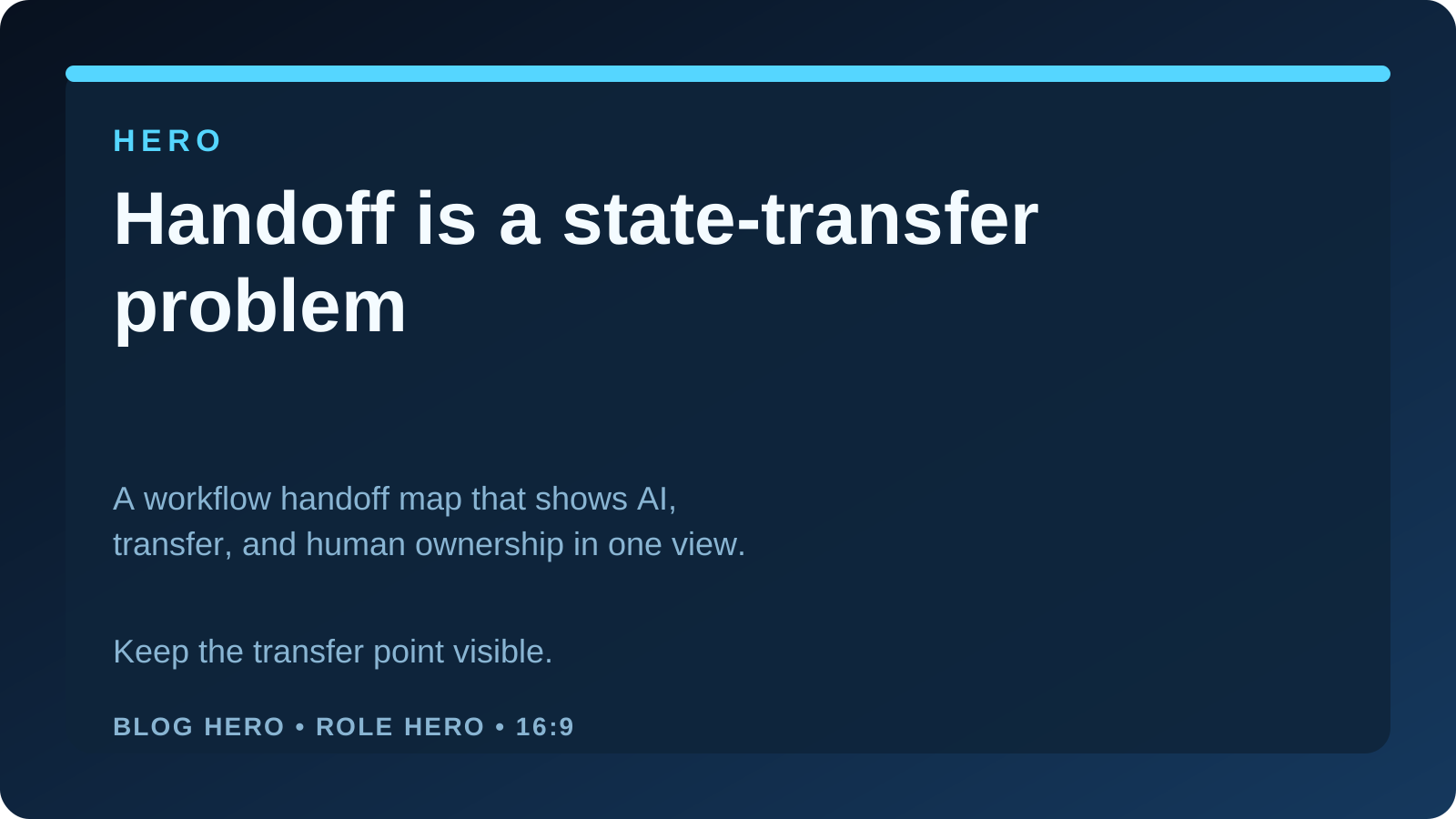
The workflow does not become reliable because AI handled the first step well. It becomes reliable when the handoff preserves context well enough for a human to continue without starting over.
That is the real operational test. Handoff is not a fallback. It is a state-transfer problem that decides whether continuity survives when ownership changes.
This page is the short operational brief. Use the related guide when you need the more direct checklist version for a team discussion.
Context loss is the failure mode
When the reason, state, and history disappear at transfer time, the receiving human has to reconstruct the workflow from scratch.
- slower resolution
- repeated questions
- confused customers
The next owner needs the state, not just the task
A clean handoff gives the new owner the trigger, the current state, the action already taken, and the next action required.
- trigger
- current state
- action already taken
- next action
Handoff should be measurable
The transfer point should be logged so the team can see where continuity breaks and improve the operating rules over time.
- logged transfer
- visible ownership
- repeatable improvement
What Remote Partners AI would check
Before a workflow is moved into support coverage, the handoff point should be written plainly enough for an agent, team lead, or client owner to understand the next action without guessing.
- who owns the next step
- what the customer was told
- what system record changed
- what is blocked or waiting
FAQ
Why not let the AI keep going?
The workflow should hand off when the work reaches a boundary AI should not cross.
What makes a clean AI-to-human transfer?
The receiving human can continue without losing continuity for the customer or internal user.
Next step
Request a workflow review.
Related resources
- the delivery model
- back-office workflow support
- human-in-the-loop QA and escalation
- shared QA system