BBB Says AI Customer Service Reviews Are Over 90% Negative
The consumer story is frustration with bots and phone trees. The buyer lesson is recovery coverage: AI support still needs staffed escalation, case ownership, and customer repair.

Direct answer
The Better Business Bureau’s June 2026 AI customer service study is trending because it puts a hard number behind a common customer complaint: more than 90% of reviews involving AI customer service were negative.
For support buyers, the lesson is not that AI should be banned from service workflows. The lesson is that automation without recovery coverage creates visible customer frustration. If customers cannot reach a trained person when the bot fails, the cost shows up as repeat contacts, bad reviews, refunds, chargebacks, churn, and brand damage.
What happened
The BBB study reviewed customer complaints and reviews involving AI customer service and warned that frustration is rising when customers cannot resolve problems or reach human support.
Local news coverage of the study highlighted growing frustration with AI-assisted customer service, including customers getting stuck in loops, repeating information, and struggling to reach a person.
The Guardian’s June consumer-service coverage described the same broader pressure point: companies are pushing customers through phone trees, automation, and long waits while consumers say access to useful human help has become harder.
KCRG’s coverage of the BBB findings reinforced the same operating point: AI-assisted service becomes a customer-experience risk when people cannot reach a human escalation path.
Why this is trending
The number is stark enough to travel: over 90% negative reviews is not a small usability problem.
It lands at the same time many companies are testing AI agents, self-service portals, and automated phone support to reduce support costs. Buyers want efficiency, but customers judge the system by whether their issue gets resolved.
It also gives customer service leaders a practical boardroom argument. The cost of AI support is not only software, usage, and implementation. It includes the staffed recovery layer that handles customers when automation fails.
The Remote Partners AI take
Support automation should be designed around the customer moment, not the vendor demo.
AI can handle routine requests, summarize cases, draft replies, route intent, and reduce repetitive work. But real service still needs people who can listen, interpret messy context, fix records, call customers back, handle exceptions, and take responsibility when the system fails.
The operating question is simple: when the bot cannot resolve the issue, who owns the customer?
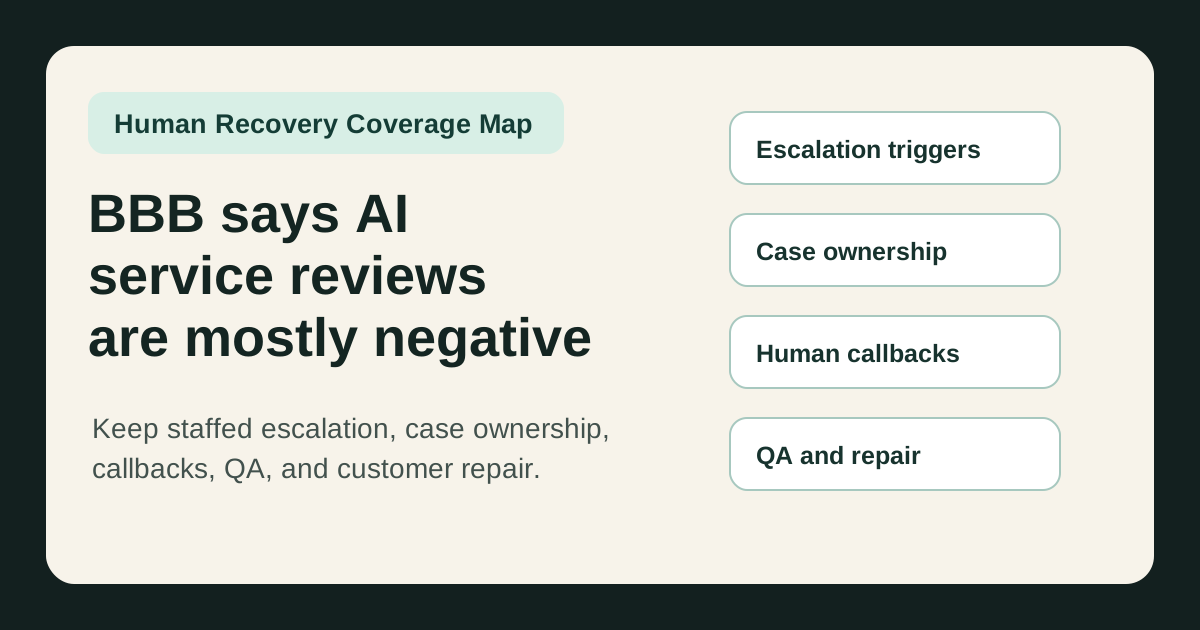
Human Recovery Coverage Map
Use this map before cutting support coverage or replacing a staffed lane with automation.
| Support layer | What AI can handle | Where customers get angry | Human recovery proof |
|---|---|---|---|
| Routine self-service | FAQs, order status, appointment reminders, password-like workflows, simple intake | The bot repeats the same answer or cannot understand the real issue | Failed-intent report, repeat-contact trigger, and fast human escalation |
| Account-specific help | Summaries, routing, suggested replies, policy lookup, next-best action | The customer has already explained the situation and must start over | Warm handoff notes, account context, and named case owner |
| Billing and refunds | Draft explanations, classify dispute type, collect basic details | Money, credits, cancellations, and exceptions need judgment | Human approval queue, callback rule, and documented decision authority |
| Emotional complaints | Sentiment flagging, complaint categorization, priority routing | A bot response feels dismissive or trapped | Trained recovery operator, apology script, supervisor escalation, and follow-up task |
| After-hours coverage | Intake, triage, routing, appointment capture, urgency classification | Urgent callers cannot tell whether anyone will act | On-call escalation tree, next-morning callback list, and audit trail |
| QA and repair | Summaries, issue clusters, transcript review, trend detection | Failed automation keeps repeating because nobody reviews it | Weekly failed-case review, script updates, and recovery outcome metrics |
What buyers should do next
- Pick one support queue and identify which customer moments are safe for automation.
- Define the exact conditions that move a customer from bot to trained human: repeat contact, frustration, billing issue, high-risk account, urgency, or failed intent.
- Keep a staffed recovery lane for exceptions, callbacks, complaint repair, and account-specific follow-up.
- Measure bad reviews, reopened tickets, refunds, repeat contacts, and escalation quality after AI launch.
- Use remote operators for documented recovery work where the AI system needs human continuity.
- Use the support coverage calculator to size the human layer that should remain behind AI.
The real takeaway
The BBB findings make the customer side of AI support visible. A cheaper automated support model is not cheaper if customers have to fight the system to be heard.
The practical move is not to choose AI or people. It is to decide where AI belongs, where trained operators must stay accountable, and how the business repairs the customer experience when automation fails.
Buyer FAQs
- What did the BBB report about AI customer service? - The BBB study says more than 90% of reviews involving AI customer service were negative, with customers describing difficulty reaching humans, repetitive bot loops, and unresolved issues.
- Does this mean companies should avoid AI support? - No. It means AI support needs a human recovery layer. Automation can help with routine work, but staffed escalation, ownership, QA, and customer repair must be designed before rollout.
- What should a buyer ask before replacing staffed support with automation? - Ask which cases go to humans, how failed bot interactions are detected, who owns customer recovery, how complaints are reviewed, and what coverage exists when AI cannot resolve the issue.
- How should outsourced support fit around AI? - Use outsourced operators for documented recovery lanes: overflow, after-hours, failed bot handoffs, high-emotion calls, follow-up tasks, and QA review where customer trust is at risk.
Sources
- Better Business Bureau - Primary BBB study on AI customer service complaints, review sentiment, customer frustration, and recommendations for businesses using AI support.
- WGEM - Local news coverage of the BBB study and customer frustration with AI-assisted customer service.
- The Guardian - Independent consumer coverage on deteriorating customer service, automation, phone trees, wait times, and access to human help.
- KCRG - Independent local coverage of the BBB findings, annual complaint counts, and BBB recommendations for human escalation.