Text-Message AI Agents Made Support Intake an Ownership Test
TechCrunch's October 3 roundup of agents that live in text messages shows a new support reality: a customer may not be the first actor to contact the business.

Direct Answer
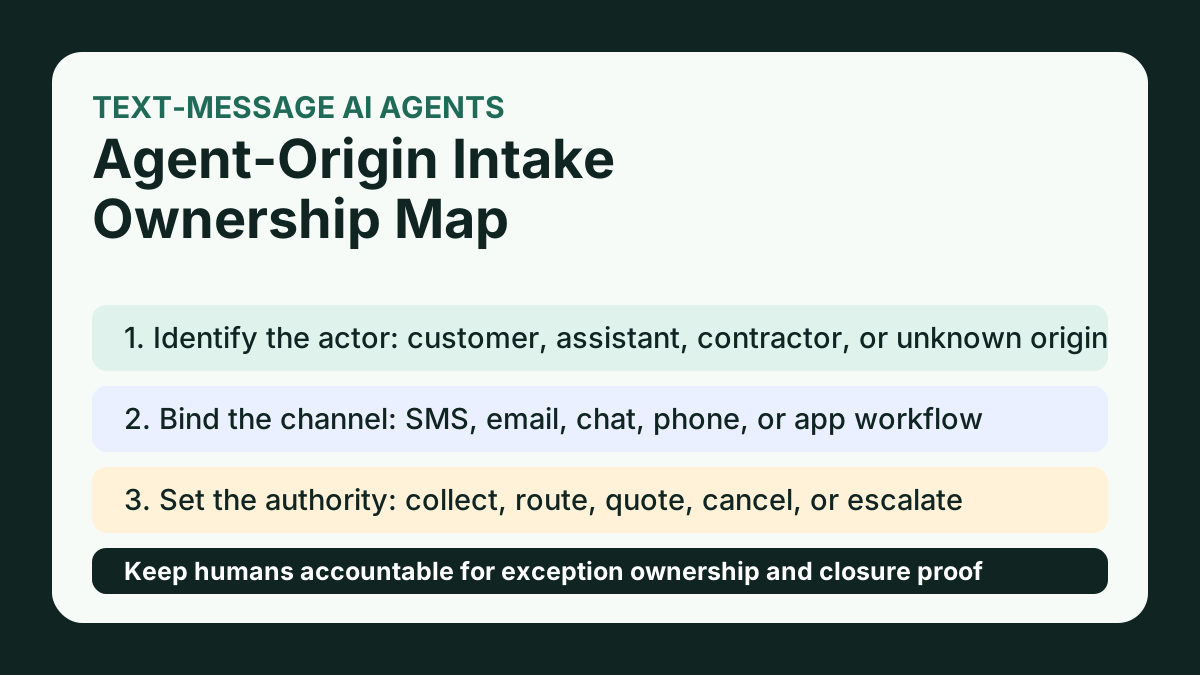
TechCrunch’s October 3 roundup shows AI agents moving into everyday text-message workflows, while earlier coverage highlighted agents that can email, text and place calls. For support buyers, the current issue is not whether one named product wins. It is whether the intake team can tell who initiated a request, which channel carried it, what authority the assistant had, and which person owns an exception. The practical response is an Agent-Origin Intake Ownership Map.
What Changed
The agent interface is shifting from a separate dashboard to channels customers already use: texts, email, calls and app messages. That makes support intake messier. A customer might ask an assistant to reschedule, compare a refund policy, send a complaint, request a callback or collect a quote before a human ever opens the message.
That does not mean every message from a customer account is authorized, complete or safe to act on. It means the support operation needs a lightweight way to classify origin and authority before routing the work to an AI workflow, remote team or internal owner.
Why This Matters Now
A traditional queue assumes the inbound message is the customer’s statement. Agent-origin contact breaks that assumption. An assistant may summarize incorrectly, omit a constraint, combine multiple tasks or ask for a change the customer did not fully understand.
The buyer risk is not only fraud. It is repeated work, unauthorized changes, quote disputes, privacy exposure and unclear accountability. A remote support partner can help with routing and follow-through, but the service scope still needs explicit rules for identity, channel, authority and human exception ownership.
Agent-Origin Intake Ownership Map
| Layer | Buyer question | Evidence to keep |
|---|---|---|
| Actor identity | Did the customer write, approve, relay or delegate the request? | Message source, consent signal and confirmation route |
| Channel binding | Did it arrive through SMS, email, chat, phone or app workflow? | Channel record and handoff metadata |
| Authority | Can the assistant only collect details, or can it request changes? | Approved action list and exception rule |
| Context | Did the message preserve the customer’s actual constraint? | Summary, prior message and clarification note |
| Human owner | Who approves price, cancellation, complaint or sensitive account work? | Named queue, escalation owner and decision log |
| Closure proof | Can the customer see what was decided and what happens next? | Customer-facing explanation and follow-up record |
This is our original planning asset. It is not a certification program, a prediction about a specific agent product or evidence that any named provider mishandled support requests.
Worked Example
Consider an illustrative appointment-change request sent by a customer’s assistant. The assistant asks to move a booking, but the message does not include whether the customer will accept a fee, a different provider or a next-week slot. A fast intake team should collect the missing constraint before changing the booking. If the request affects price, cancellation, privacy or a complaint, it should route to a person with the authority to decide.
The same rule applies to quotes and refunds. Treat agent-written text as useful intake, not automatic permission.
Buyer Bridge
Before adding remote coverage or automation to agent-origin channels, decide what the team may do without fresh confirmation. Routine collection can be delegated. Commitments, cancellations, payments, account changes and sensitive disclosures need a stronger handoff.
Remote Partners AI is a marketing partner of Azpired. Azpired confirms, contracts and delivers selected services. This article does not promise staffing capacity, response times, certifications or client outcomes.
Next Steps
- Label inbound requests by actor: customer, assistant, business user or unknown origin.
- Map each channel to the evidence retained for identity, consent and context.
- Define which work is collection-only and which work requires human approval.
- Give remote teams a written exception path for pricing, cancellations, complaints and sensitive data.
- Review repeat contacts and disputes before expanding agent-origin intake.
Use the support coverage calculator to model the human coverage layer, then confirm the proposed scope with the delivery provider.
Buyer FAQs
- Does the TechCrunch roundup prove customers will use AI agents for every support request? - No. It shows active product momentum around messaging-native agents. Buyers should prepare intake rules without assuming universal adoption.
- Can a remote support team simply treat agent-origin requests as ordinary customer messages? - Not always. The team needs to know whether the customer authorized the request, whether the assistant can make commitments, and when a person must verify intent.
- Who confirms delivery through Remote Partners AI? - Remote Partners AI is a marketing partner of Azpired. Azpired confirms, contracts and delivers selected services; scope and availability require confirmation.
Sources
- TechCrunch October 3 roundup - Current independent roundup of messaging-native agents, including email, phone-call, SMS and app-workflow positioning.
- TechCrunch on Instinct - Independent profile of an agent positioned around email, text and calls; useful context, not a Remote Partners AI endorsement.
- U.S. FTC AI claims guidance - Regulatory guidance to keep AI claims grounded and avoid overstating what automation can do.