Remote Partners AI

For VoIP Stack Index visitors

Turn your VoIP shortlist into a safe AI voice rollout.

If VoIP Stack Index helped you compare providers, PBX options, SIP routes, or LiveKit, Remote Partners AI can map the first call path, build the technical layer, and define the human handoff before real callers move.

Provider fit PBX and SIP LiveKit CRM handoff Human fallback
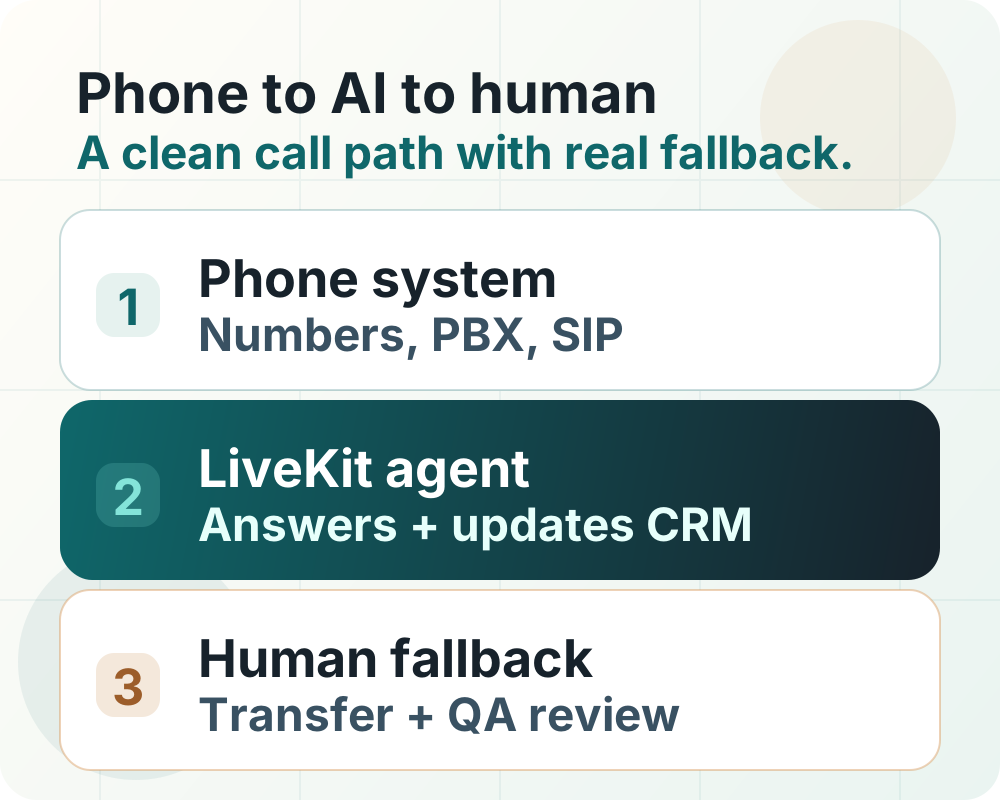
Phone-system implementation map showing providers, PBX routing, SIP trunks, LiveKit voice agents, CRM handoff, QA, and human fallback.

Direct answer

The next move is not another demo. It is a call-path map.

A comparison can show which provider or platform might fit. Production still needs a safe route for the main number, failover, CRM outcomes, transfer behavior, and the people who handle exceptions. Start with one call path, prove it, then expand.

  • Check whether the current provider can support the first AI or overflow route.
  • Choose the PBX, SIP, carrier, or LiveKit layer only when it solves a real routing problem.
  • Keep urgent, unclear, and sensitive calls under trained human escalation.
Review scope

What we check before AI or outsourced support answers real calls.

Provider and number control

Review the provider, number ownership, porting risk, forwarding, business hours, queues, caller ID, recordings, and no-answer behavior before routing callers to AI.

PBX, SIP, or LiveKit path

Decide whether the first path should use the current provider, FreePBX, FusionPBX, Asterisk, FreeSWITCH, VICIdial, SIP/BYOC, or a LiveKit voice-agent build.

CRM and workflow handoff

Map the call outcome into approved CRM notes, scheduling, ticket updates, dispatch details, lead routing, summaries, and follow-up tasks.

Human fallback and QA

Define who receives urgent, unclear, sensitive, failed-tool, or low-confidence calls, and how the first production calls will be reviewed.

Buyer fit

Use this path when the comparison is done but ownership is still unclear.

Fit check

You compared providers but still need the implementation route

Use this when the shortlist is clear but the buyer still needs to know whether forwarding, SIP, PBX, LiveKit, or managed support should own the first path.

Fit check

You want AI answering without breaking the main number

Use this when the business must protect caller ID, recordings, queues, emergency exceptions, fallback, and rollback while testing AI or human overflow coverage.

Fit check

You need humans to carry exceptions

Use this when callers need callbacks, dispatch notes, lead routing, quote follow-up, or judgment that should not be forced through automation.

Consultation path

Move from provider research to one launchable call path.

Step 1

Bring the comparison context

Share the provider, PBX, SIP, or LiveKit route you are considering and the call path you want AI or trained support to handle first.

Step 2

Map the safest first call path

Document numbers, routing, business hours, fallback, recordings, CRM outcomes, human escalation, and rollback before production traffic moves.

Step 3

Choose build, support, or hybrid ownership

Decide whether Remote Partners AI should build the phone layer, operate the human handoff path, or support a blended AI plus agent workflow.

Step 4

Launch with QA before expansion

Use early call reviews, transfer checks, transcript quality, tool failures, and escalation notes to decide whether more call types should move.

Proof artifacts

What you should have before expanding call volume.

Decision artifact

Phone-stack fit map

A practical map showing whether your current provider can support the first AI answering path or whether the PBX, SIP, carrier, or LiveKit layer needs work first.

  • Provider constraints
  • Number and routing control
  • First call path selected

Launch artifact

Cutover and fallback plan

A narrow go-live plan that names what changes, who approves it, how calls roll back, and where urgent or unclear callers go.

  • Approved route
  • Rollback trigger
  • Human fallback owner

QA artifact

First-call review packet

A review packet for early production calls covering transfer quality, transcripts, tool actions, cost exposure, and human handoff outcomes.

  • Reviewed calls
  • Failed tool notes
  • Expansion decision

References

Source pages to keep open while scoping the route.

VoIP Stack Index comparison hub

AI-ready VoIP provider comparisons covering business phone systems, SIP trunks, LiveKit, and implementation ownership.

VoIP Stack Index LiveKit SIP guide

Buyer guide for planning LiveKit SIP trunks, dispatch rules, SIP participants, CRM handoff, failover, and human fallback.

Remote Partners AI provider review on VoIP Stack Index

VoIP Stack Index review of Remote Partners AI as a custom implementation path for AI-ready phone systems.

Remote Partners AI VoIP and LiveKit implementation

Remote Partners AI implementation scope for PBX, SIP, provider admin, LiveKit voice agents, CRM handoff, monitoring, and human escalation.

LiveKit telephony documentation

LiveKit documentation for phone numbers, SIP trunks, dispatch rules, SIP participants, inbound calls, outbound calls, and transfers.

FAQ

Questions buyers usually have after a VoIP Stack comparison.

What should I bring from VoIP Stack Index?

Bring the provider page, comparison, readiness result, or guide that made you consider a change. The useful details are your current provider, phone numbers, call path, business hours, CRM or calendar handoff, and where callers need human fallback.

Do we have to switch VoIP providers first?

No. The first review checks whether the current provider can safely support forwarding, SIP, queues, recordings, failover, and human handoff. If it can, the first AI or managed-support path may be built around what you already use.

Can Remote Partners AI build the technical phone layer?

Yes. The scope can include FreePBX, FusionPBX, Asterisk, FreeSWITCH, VICIdial, provider admin, SIP/BYOC, LiveKit voice agents, CRM handoff, monitoring, QA, and human escalation.

Can this become a managed call-answering or support workflow?

Yes. If the business needs people behind the AI path, Remote Partners AI can help scope trained support, escalation rules, callback queues, dispatch notes, CRM updates, and QA review.

Next step

Bring the comparison. We will map the first safe call path.

Share the provider, PBX, SIP, or LiveKit route you are considering and the workflow that needs AI, outsourced support, or human fallback first.

Map my VoIP stack