Training contract
Solution
Turn Tools and Notes Into Usable Instructions
Translate CRM, dispatch, phone, inbox, spreadsheet, and ticket habits into simple steps agents can follow safely.
Solution answer
Tool-and-process translation turns how your team actually uses software and notes into instructions, examples, and checklists that outsourced support can follow.
When To Use This
A good fit when the issue is repeatable but still needs judgment and control.
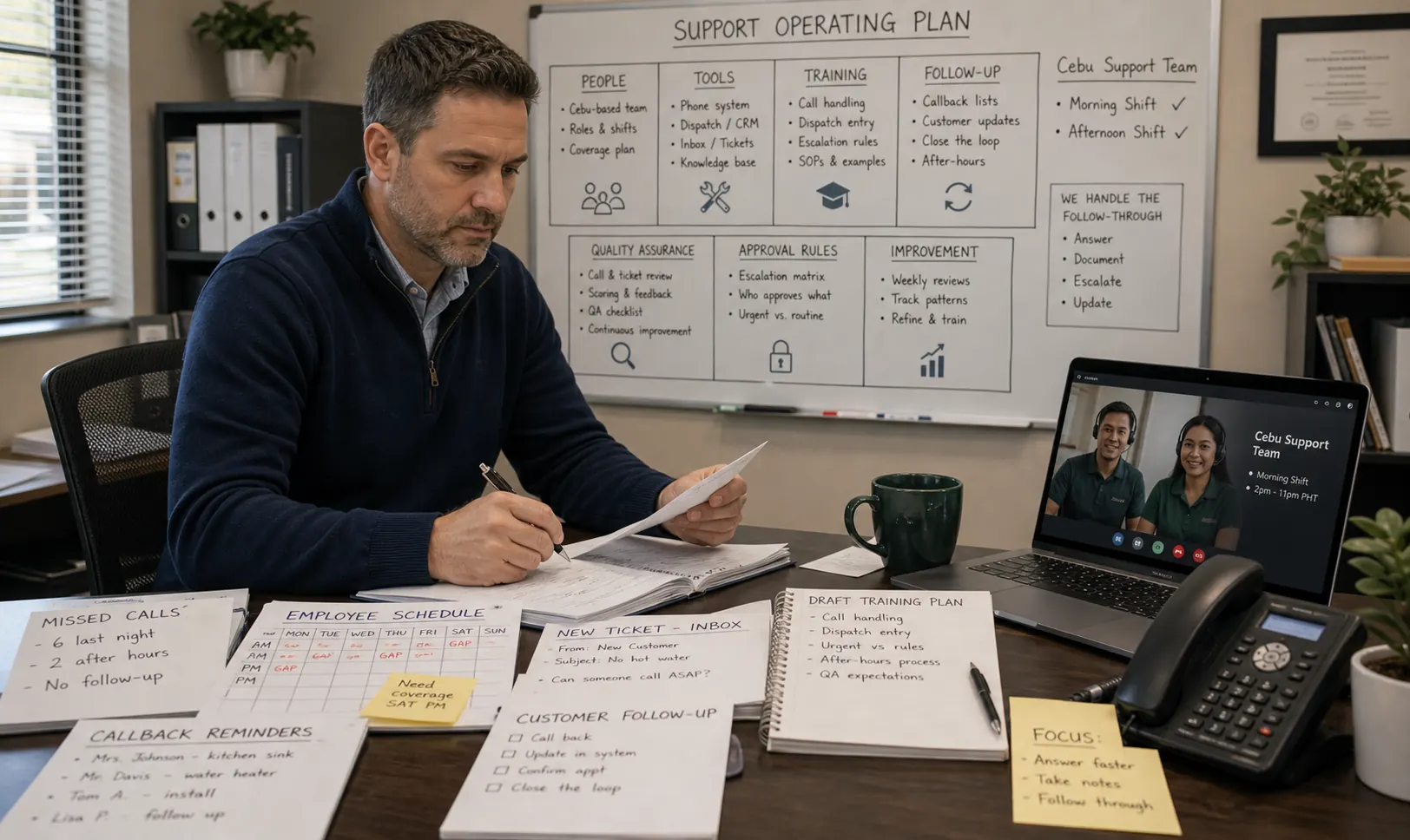
Use this when your team works across CRMs, dispatch boards, inboxes, phone systems, spreadsheets, or ticket tools but the handoff steps are not written clearly.
Common signals
Client control
What stays under your approval?
What improves
What should improve?
Agents learn the practical tool behavior behind the work, not just a generic support script.
Operating checkpoints
How to know this support workflow is ready to hand off.
The strongest launch is narrow enough to train, visible enough to review, and useful enough to relieve the team before more channels or tasks are added.
Start with one queue
Start here when your team works across CRMs, dispatch boards, inboxes, phone systems, spreadsheets, or ticket tools but the handoff steps are not written clearly. The first scope should name the channel, owner, tool access, expected response, and review cadence.
Make control visible
Client control stays explicit: tool permissions, approved update rules. Anything outside the approved scope routes back before a customer promise is made.
Review before expanding
QA should compare real notes, callbacks, and escalations against the training contract before adding more volume, more tools, or longer coverage hours.
Services that help
Services that can support this solution
Start with the operating problem first. The right service mix comes after the training, tools, approval, and quality-review rules are clear.
Back-Office Workflow Support
AI Back-Office Workflow Support and Admin Outsourcing
Adds admin support when the solution depends on cleaner notes, scheduled follow-up, CRM hygiene, or records that stay reviewable.
AI Chat Support
AI Chat Support Outsourcing and Ticket Support
Adds written support when the solution depends on inbox triage, ticket routing, documented replies, or tone control.
QA and Escalation
Human-in-the-Loop QA and Escalation Support
Adds the control layer: QA criteria, escalation timing, approval rules, correction loops, and AI use that managers can inspect.
Next step
Turn this problem into a support operating plan.
Share the calls, tools, notes, and follow-up work that keep breaking. We can help define what gets trained, what stays under approval, and where Cebu-based support should start.