
After-Hours Support
After-hours answering for home service companies that cannot let calls sit overnight.
Home service companies can outsource after-hours answering for overflow calls, urgent intake, routine customer questions, appointment requests, callbacks, and next-day follow-up. Remote Partners AI helps scope managed support that follows your scripts, captures clean notes, uses AI where it helps speed review, and escalates urgent or sensitive calls to your on-call owner.
After-hours calls Weekend coverage Urgent intake Next-day follow-up
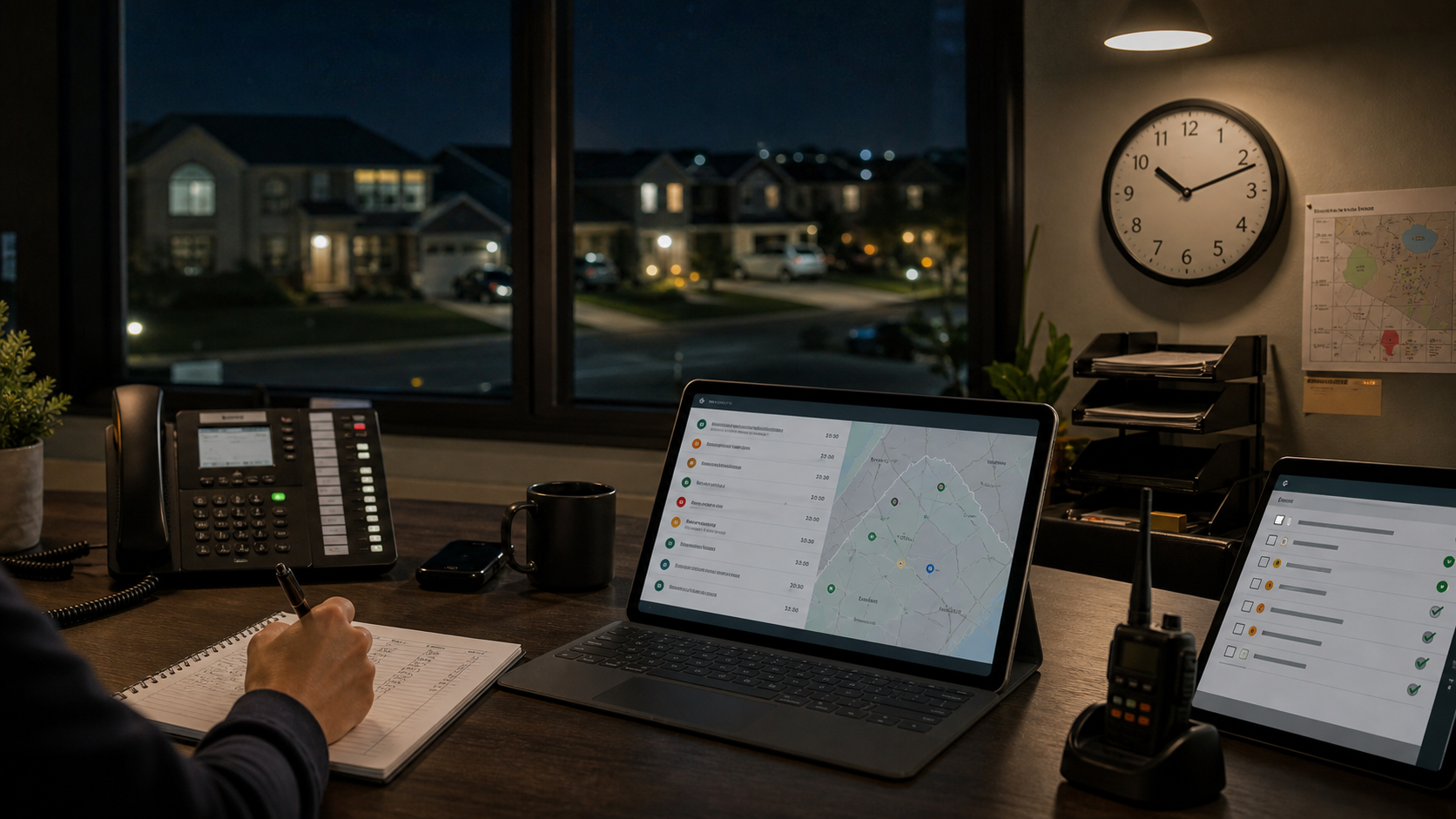
After-hours workflow visual
How after-hours answering turns calls into a cleaner morning queue
The visual path shows how calls get classified, documented, escalated, or prepared for the next business day.
Define after-hours call categories
Separate emergencies, quote requests, booking questions, appointment changes, customer updates, and next-day callbacks.
Set the escalation tree
Choose who gets contacted for urgent calls, what information they need, and what cases should wait for business hours.
Launch with documented handoff notes
Start by answering and documenting after-hours calls before adding booking authority or more complex dispatch steps.
Review morning outcomes
Check call notes, escalation accuracy, callback completion, missed opportunities, and recurring caller questions.
What changes Customers reach a person, urgent calls move, and the morning team starts with better context.
Call-type matrix
After-hours answering works when the team knows what happens after pickup.
Buyers are not only searching for someone to answer the phone. They want to know which calls wake the on-call person, which calls wait until morning, and what fields must be captured before dispatch can trust the handoff.
True emergency
What agents should capture
Address, active risk, current customer status, access notes, and callback number.
Next action: Escalate immediately to the approved on-call owner with a complete handoff.
Routine service request
What agents should capture
Service type, symptoms, preferred time, customer record, and availability constraints.
Next action: Document for booking review or book only if the workflow gives agents that authority.
Quote or estimate request
What agents should capture
Project type, location, urgency, photos or context where approved, and decision timeline.
Next action: Create a callback or estimate task while the lead is still warm.
Warranty, refund, or angry customer
What agents should capture
Customer identity, job reference, issue summary, and safest contact path.
Next action: Route to the manager, owner, or dispatcher instead of improvising policy language.
Support Scope
What the after-hours team can help handle.
The safest starting point is a clear answering workflow with a defined escalation tree. That gives customers a human response without pretending every decision should move outside your internal team.
- Answer after-hours and weekend calls using your approved script.
- Collect caller details, service type, location, urgency, and preferred next step.
- Document routine calls for next-day callback, booking review, or admin follow-up.
- Escalate emergency, unclear, or customer-sensitive calls using your rules.
- Support appointment confirmations, missed-call callbacks, and customer status updates.
- Use AI to assist with call summaries, routing signals, QA review, and follow-up drafts.
Morning QA
The morning review is the operating proof point.
After-hours answering works when the next business day starts with useful records, not mystery voicemails. These checks make the workflow easier to inspect and give the team a practical launch standard.
- Did every after-hours call have a caller, address or service location, issue type, urgency, and next-step owner?
- Did urgent calls reach the right on-call person without exposing agents to pricing, warranty, refund, or safety judgment?
- Did routine calls create a clean morning queue instead of forcing the office to re-ask basic questions?
- Did the QA sample reveal missing script fields, ambiguous call categories, or escalation delays?
Launch Path
How to start without burning out owners or dispatchers.
Begin with documented answering and escalation. Add more booking, dispatch, or follow-up authority only after notes, handoffs, and QA are reliable.
Step 1
Define after-hours call categories
Separate emergencies, quote requests, booking questions, appointment changes, customer updates, and next-day callbacks.
Step 2
Set the escalation tree
Choose who gets contacted for urgent calls, what information they need, and what cases should wait for business hours.
Step 3
Launch with documented handoff notes
Start by answering and documenting after-hours calls before adding booking authority or more complex dispatch steps.
Step 4
Review morning outcomes
Check call notes, escalation accuracy, callback completion, missed opportunities, and recurring caller questions.
Answer bank
After-hours questions and operating details.
The buyer path above stays focused on the decision. These deeper sections preserve the operational answers, examples, related services, and comparison paths for people who want to inspect the model.
Where does after-hours coverage usually break?
Voicemail loses jobs after hours
Many customers call the next provider if they cannot reach a person when the office is closed.
Owners and dispatchers burn out carrying the phone
After-hours coverage can quietly become a second shift for the same people running daytime operations.
Urgent and routine calls get mixed together
A true emergency, a quote request, an appointment change, and a general question should not follow the same path.
Next-day follow-up starts messy
Poor notes, unclear caller intent, and missed callbacks can make the morning queue harder than it needs to be.
What proof is needed before this becomes dispatch support?
Phone system and after-hours routing
The first tool decision is who receives each call type after the office closes: agent, on-call owner, dispatcher, or next-day queue.
Shared notes or field-service record
Morning teams need clean notes with caller details, service type, urgency, requested timing, and any escalation attempt.
On-call escalation tree
Agents need exact rules for what wakes someone up, what waits until morning, and what information the on-call person needs before calling back.
Example scenario
After-hours queue split between urgent calls and morning follow-up
A home services company receives calls after 6 p.m. from customers with active issues, quote questions, appointment changes, and routine status requests.
After launch: Owners stop carrying every after-hours call personally while true urgent work still reaches the right internal person.
How after-hours answering compares with common alternatives.
After-hours coverage is not only about answering the phone. The real choice is how much risk, context, and owner interruption the business can tolerate.
Owner on-call
Best for direct judgment, worst for burnout
Owner-carried coverage protects sensitive decisions but turns nights and weekends into an endless second shift.
Voicemail
Best for low-cost non-coverage
Voicemail is cheap, but urgent callers and high-intent leads often call the next provider instead of waiting.
Remote Partners AI
Best for sorted coverage
Agents answer, classify, document, and escalate by rule so the morning queue is cleaner and urgent calls do not sit overnight.
Which services and tools connect to after-hours support?
Emergency boundary
Can offshore agents handle home services emergency calls?
Use this answer when after-hours calls include leaks, no-heat calls, lockouts, or urgent customer situations that need clear escalation.
Plumbing triage
Plumbing answering and emergency triage
See how urgent plumbing intake can move through a controlled support workflow without moving final property-risk decisions offshore.
HVAC dispatch
HVAC call answering and dispatch support
Compare after-hours coverage with HVAC intake, seasonal call spikes, booking notes, and dispatcher handoffs.
Dispatch scripts
Answering service dispatch scripts and fields
Use the field checklist and sample language to define what agents collect before a call becomes dispatch-ready.
Coverage planning
Support coverage calculator
Estimate the staffing coverage needed for evenings, weekends, peaks, QA review, and the next morning callback queue.
AI Voice Support
AI Voice Support Outsourcing for Call Answering and Dispatch
Answer after-hours calls, collect urgency details, separate routine requests from emergencies, and prepare clean next-day notes.
Back-Office Workflow Support
AI Back-Office Workflow Support and Admin Outsourcing
Turn overnight messages into callback tasks, appointment reminders, job notes, and morning queue items your office can review.
QA and Escalation
Human-in-the-Loop QA and Escalation Support
Check whether urgent calls escalated correctly, routine calls were documented, and unclear requests reached the approved owner.
Tool
Missed Call Revenue Calculator
Estimate how much overnight voicemail, weekend calls, and delayed emergency callbacks can put at risk before you scope after-hours coverage.
Comparison
Answering service dispatch vs outsourced dispatch support
Compare message taking with outsourced dispatch support when calls need triage, job notes, on-call routing, or next-day follow-up ownership.
FAQ
After-hours answering questions.
Can after-hours agents dispatch emergency jobs?
They can follow your documented dispatch or escalation rules, but urgent, unclear, safety-sensitive, or high-value calls should route to your on-call dispatcher, manager, or owner.
What should after-hours answering handle first?
Start with call answering, intake, note capture, missed-call callbacks, appointment requests, customer updates, and documented emergency escalation before expanding into booking or dispatch authority.
Does after-hours answering replace our internal team?
No. The goal is to remove repeatable after-hours pressure while keeping emergency judgment, exceptions, and sensitive customer decisions with your internal team.
Where does AI help with after-hours answering?
AI can assist with summaries, routing support, QA review, and follow-up drafts. Trained agents should still own caller tone, detail collection, escalation, and customer-sensitive judgment.
What calls should always wake up the on-call person?
Any safety-sensitive, property-damage, active service-failure, angry, VIP, commercial, or unclear call should follow your escalation tree instead of waiting for morning review.
How should morning handoff notes be reviewed?
Review whether notes include caller identity, service address, urgency, requested next step, escalation status, and enough context for the office to continue without re-asking basic questions.
Next Step
Want to know which after-hours calls should move first?
Bring us your voicemail problem, weekend coverage need, on-call burden, emergency triage rules, or morning callback backlog. We will help map the cleanest first workflow.