Remote Partners AI

HVAC Support

HVAC call answering and dispatch support for busy service teams.

HVAC companies can outsource overflow calls, after-hours answering, booking support, dispatch notes, customer updates, estimate follow-up, and routine admin work. Remote Partners AI helps scope managed support that follows your scripts, documents each call clearly, and escalates emergencies or unclear requests to your dispatcher, manager, or on-call technician.

After-hours calls Seasonal overflow Dispatch notes Follow-up
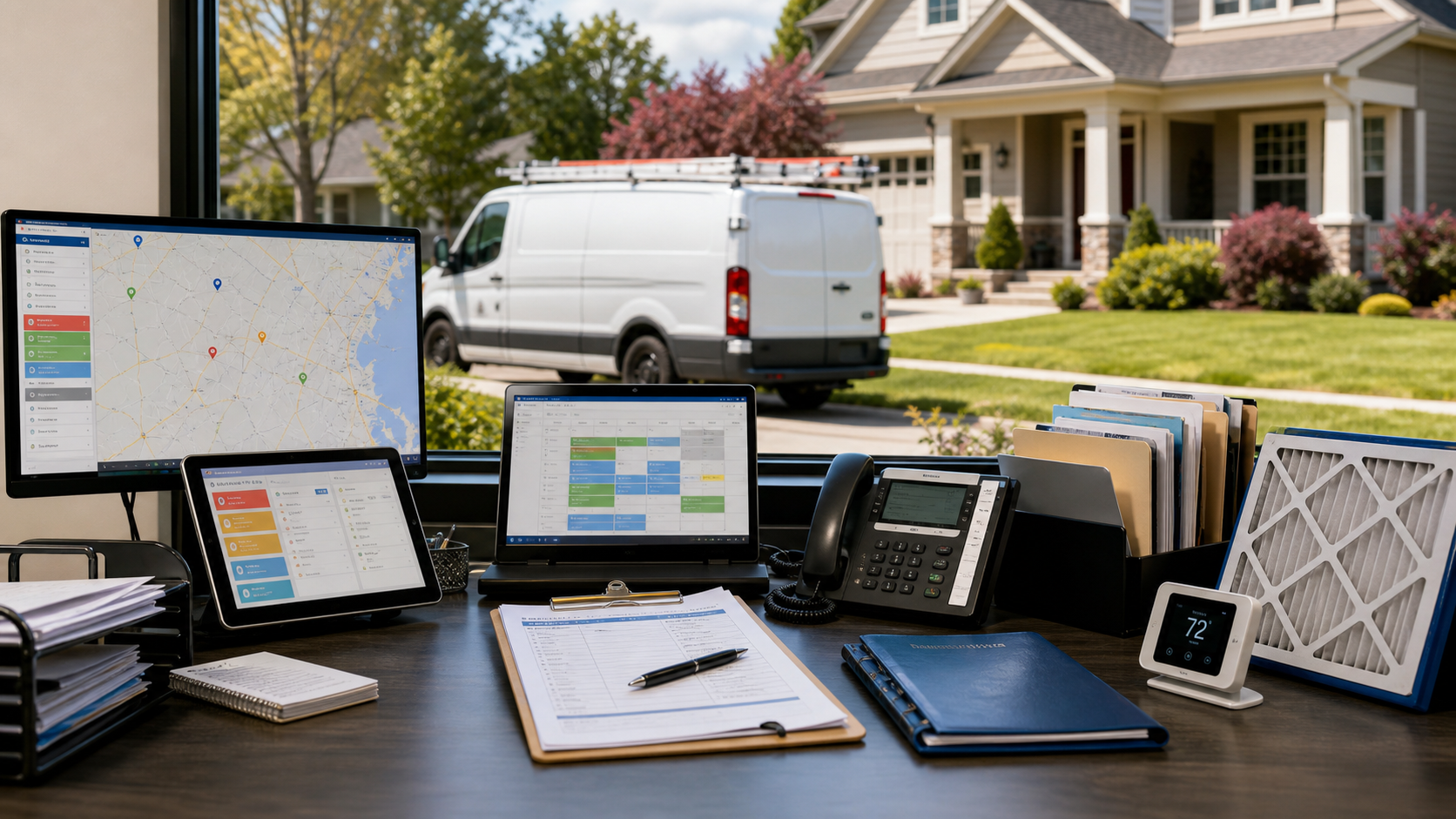
HVAC dispatch desk with route screens, call equipment, service tickets, filter, thermostat, and vans outside a suburban home.

First workflow

What should an HVAC company outsource first?

Start with overflow answering, after-hours intake, missed-call callbacks, dispatch notes, appointment confirmations, and estimate follow-up. Keep emergency, unclear, angry, or high-risk calls on an escalation path to your dispatcher or on-call owner.

Answer Overflow, seasonal spikes, after-hours calls, and routine service inquiries.
Qualify Collect caller details, location, equipment issue, urgency, and preferred appointment window.
Handoff Prepare clean notes for dispatch, callbacks, booking updates, or internal review.
Escalate Route emergencies, angry customers, warranty exceptions, and unclear jobs to the right owner.

HVAC workflow visual

How HVAC support moves from call to clean handoff

The visual path shows how a busy HVAC team can start with a narrow, reviewable workflow before expanding support.

01

Start with the call types

Separate routine inquiries, quote requests, maintenance calls, urgent repair calls, warranty issues, and existing-customer updates.

02

Write the intake and escalation rules

Define what agents can collect, what they can say, when to book, and when to escalate to dispatch or management.

03

Launch one workflow first

Begin with overflow, after-hours, callbacks, or follow-up before expanding into more dispatch-adjacent work.

04

Review outcomes weekly

Check missed-call recovery, callback completion, note quality, escalation accuracy, and recurring customer issues.

What changes Calls are answered, notes are cleaner, emergencies escalate, and follow-up has a visible owner.

Proof artifacts

What HVAC managers can inspect before giving agents more dispatch-adjacent authority.

The first workflow should produce evidence the office can judge before expanding from intake and notes into broader booking, callback, or dispatch support.

Dispatch artifact

HVAC call intake fields

The fields dispatchers need before they can trust an outsourced no-heat, no-cool, estimate, warranty, or maintenance call.

  • Caller, address, equipment symptoms, and access notes
  • No-heat/no-cool, safety, vulnerable occupant, warranty, or quote flag
  • Preferred window and escalation owner

QA artifact

Seasonal overflow QA sample

Review peak-season calls for urgency sorting, note completeness, caller tone, and whether dispatch received useful context.

  • Sampled overflow and after-hours calls
  • Escalation accuracy by call type
  • Callback and estimate follow-up completion

Commercial artifact

HVAC pricing factors

The scope is priced by coverage pressure and dispatch risk, not just a generic answering-service seat.

  • Seasonal volume and after-hours window
  • Booking authority versus note-only handoff
  • ServiceTitan or field-service software complexity

Operating pressure

Where HVAC support usually starts breaking.

HVAC owners and managers usually feel the problem first in missed calls, weak notes, dispatcher overload, and follow-up that happens too late.

Seasonal call volume overwhelms the front desk

Heat waves, cold snaps, tune-up seasons, and promotion periods can create more calls than the office team can answer cleanly.

After-hours calls need more than voicemail

No-cool, no-heat, maintenance, warranty, and quote requests need triage rules so urgent calls move faster and routine work is documented.

Dispatch notes are only useful when they are complete

HVAC teams need caller details, symptoms, location, equipment context, urgency, and next-step notes captured consistently.

Follow-up quietly leaks revenue

Estimate follow-up, appointment confirmations, missed-call callbacks, and membership reminders can slip when dispatchers are overloaded.

Support scope

What the support team can help handle.

The cleanest first workflow is the work your team can define, audit, and improve. That keeps the service useful without pretending every HVAC decision should be outsourced.

  • Answer overflow and after-hours HVAC calls using your script.
  • Collect intake details before a dispatcher or technician reviews the job.
  • Prepare dispatch notes, callback lists, appointment updates, and CRM follow-up tasks.
  • Send routine customer updates when your team defines the approved wording and workflow.
  • Support chat, ticket, or inbox queues tied to HVAC service requests.
  • Use AI to assist with summaries, routing signals, QA review, and repetitive follow-up drafts.

Dispatch proof

What has to be clear before HVAC answering becomes dispatch support.

Ranking strength comes from showing the work behind the promise: which tools agents touch, which fields they collect, which calls stay internal, and what a real scenario looks like before authority expands.

Dispatch or booking board

Agents can collect equipment symptoms, location, preferred windows, and urgency signals before your dispatcher decides the final route.

CRM and maintenance records

HVAC support needs enough account context to identify existing customers, membership notes, warranty flags, and follow-up ownership.

Phone, chat, and inbox queues

Overflow calls, missed-call callbacks, web leads, and service inbox messages should feed the same escalation and note standard.

Example scenario

Seasonal no-cool overflow without losing dispatch control

During a heat wave, the office receives more no-cool calls, maintenance questions, and estimate follow-ups than the front desk can cleanly process.

  • Agents answer overflow calls, collect address, equipment symptoms, access notes, and urgency signals.
  • Routine maintenance and quote requests are documented for callback or booking review.
  • No-cool, angry, warranty, safety, or unclear calls escalate to dispatch or the on-call owner.
  • QA reviews note completeness, escalation accuracy, and missed-call recovery.

After launch: The HVAC team protects urgent calls, keeps routine follow-up moving, and avoids giving outsourced agents final dispatch judgment before the rules are proven.

Launch path

How to start without creating a messy handoff.

The goal is not to move every call offshore at once. Start with one workflow, make the rules visible, then expand when the notes, escalations, and QA are working.

Step 1

Start with the call types

Separate routine inquiries, quote requests, maintenance calls, urgent repair calls, warranty issues, and existing-customer updates.

Step 2

Write the intake and escalation rules

Define what agents can collect, what they can say, when to book, and when to escalate to dispatch or management.

Step 3

Launch one workflow first

Begin with overflow, after-hours, callbacks, or follow-up before expanding into more dispatch-adjacent work.

Step 4

Review outcomes weekly

Check missed-call recovery, callback completion, note quality, escalation accuracy, and recurring customer issues.

Tool Context

Where this support workflow touches your daily operation.

The useful work is not just answering more contacts. It is knowing which systems, fields, notes, and handoffs make the next internal step easier.

Dispatch or booking board

Agents can collect equipment symptoms, location, preferred windows, and urgency signals before your dispatcher decides the final route.

CRM and maintenance records

HVAC support needs enough account context to identify existing customers, membership notes, warranty flags, and follow-up ownership.

Phone, chat, and inbox queues

Overflow calls, missed-call callbacks, web leads, and service inbox messages should feed the same escalation and note standard.

Case Scenario

Seasonal no-cool overflow without losing dispatch control

During a heat wave, the office receives more no-cool calls, maintenance questions, and estimate follow-ups than the front desk can cleanly process.

  • Agents answer overflow calls, collect address, equipment symptoms, access notes, and urgency signals.
  • Routine maintenance and quote requests are documented for callback or booking review.
  • No-cool, angry, warranty, safety, or unclear calls escalate to dispatch or the on-call owner.
  • QA reviews note completeness, escalation accuracy, and missed-call recovery.

Result:The HVAC team protects urgent calls, keeps routine follow-up moving, and avoids giving outsourced agents final dispatch judgment before the rules are proven.

Comparison

How HVAC support compares with common alternatives.

The right answer depends on whether the bottleneck is call volume, dispatch judgment, or inconsistent follow-up after the first call.

Internal hire

Best when one trained person can cover the whole window

A local receptionist can work well for office-hour ownership, but seasonal spikes and after-hours calls can still leave gaps.

Generic answering service

Best for message capture only

Basic answering can reduce voicemail, but HVAC buyers usually need intake fields, emergency rules, and dispatch-ready notes.

Remote Partners AI

Best for managed overflow support

Use a trained Cebu bench for overflow, callbacks, routine updates, and QA-visible handoffs while dispatch decisions stay internal.

Related Services

The HVAC page connects back to real support services.

The vertical promise ties back to call answering, follow-up support, QA, and escalation so the buyer can see exactly how coverage would work.

FAQ

HVAC call answering questions.

Can an outsourced team book HVAC jobs directly?

Yes, if your process is documented clearly. Many teams start by collecting details and preparing booking or dispatch notes, then expand booking authority once scripts, calendars, escalation rules, and QA checks are working.

Should emergency HVAC calls be handled offshore?

Emergency calls can be answered and triaged using your rules, but safety-sensitive, unclear, angry, or high-risk calls should escalate to your dispatcher, manager, or on-call technician.

Can the team work inside our HVAC software?

The team can be trained to follow your documented process inside the tools you already use. Formal integration, certification, or software-partner claims should only be made when verified.

Where does AI fit in HVAC call answering?

AI can assist with call summaries, routing suggestions, QA review, and follow-up drafts. Trained agents should still own tone, intake quality, escalation, and customer-sensitive judgment.

What HVAC details should agents collect before handoff?

Useful HVAC intake usually includes caller identity, service address, equipment type when known, symptom, urgency, membership or warranty context, access notes, and preferred timing. Your dispatcher still decides what gets booked, escalated, or assigned.

How do we know the HVAC workflow is ready to expand?

Expand only after note quality, escalation accuracy, missed-call recovery, callback completion, and customer tone are consistently reviewed against the SOP.
Next step

Want to know which HVAC support workflow should move first?

Bring us your missed-call problem, after-hours coverage need, seasonal overflow, callback backlog, or dispatch pressure. We will help map the cleanest first workflow.